One moment everything is fine. Then out of nowhere — a high-pitched ringing in your ear that wasn’t there a second ago. If you have ever experienced this, you know how unsettling it feels. Your first thought is probably something along the lines of: is something wrong with me? The short answer is — it depends. Sudden ear ringing can be completely harmless and temporary, or it can occasionally signal something that needs medical attention. Knowing the difference is what matters. Let me walk you through exactly what causes that sudden ringing in your ear, what your body is actually doing when it happens, and what you can do about it.
First, What Is That Ringing Sound Actually?
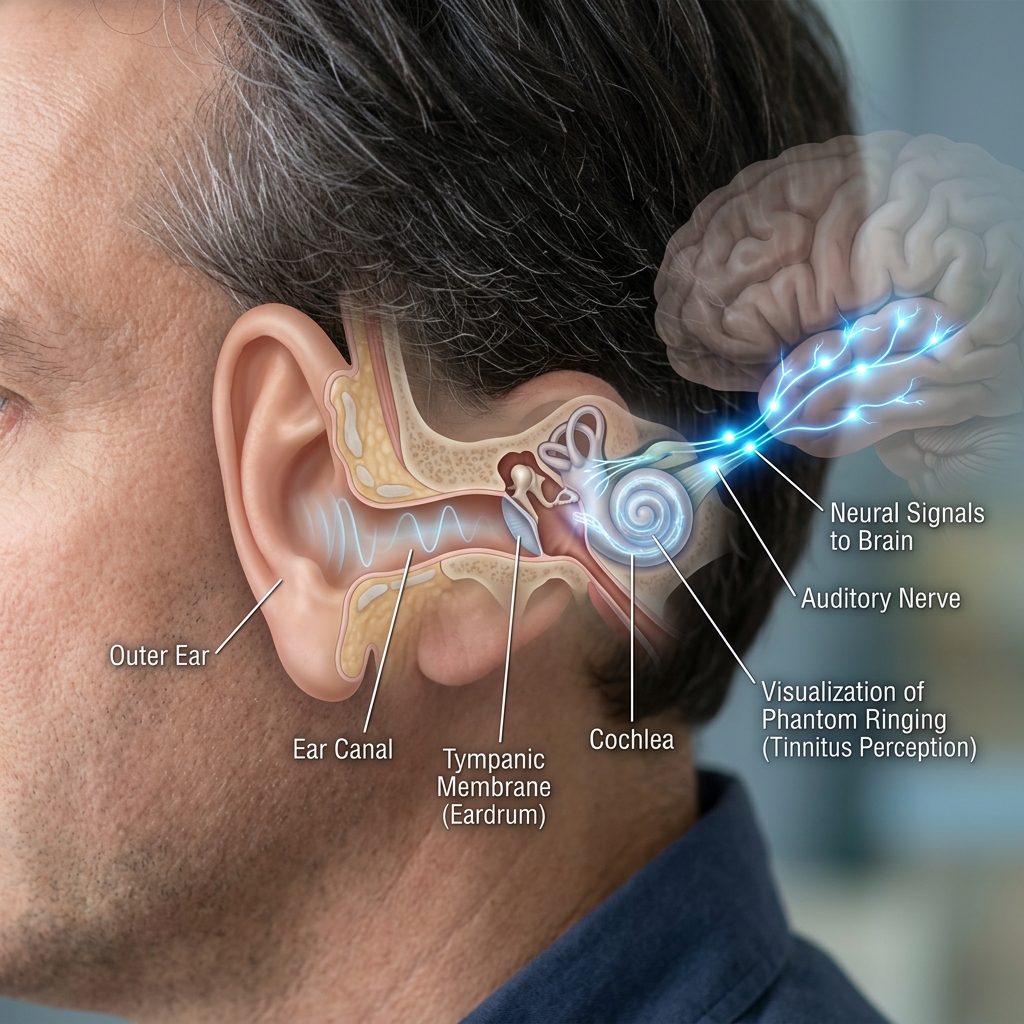
The medical term is tinnitus — the perception of sound that has no external source. In other words, the ringing, buzzing, or humming you hear is being generated internally, not by anything in your environment. Here is the part that surprises most people: that sound is not coming from your ear. Research from the National Institutes of Health shows that tinnitus is actually generated by your brain’s auditory cortex — the region that processes sound. Think of it this way. Your inner ear contains thousands of tiny hair cells that convert sound waves into electrical signals and send them to your brain. When something disrupts those hair cells — even temporarily — the brain does not simply go quiet. It compensates by generating its own signal. That signal is the ringing you hear.
Read also: How to Stop Ringing in Ears
Why Is My Ear Ringing All of a Sudden? The Most Common Reasons
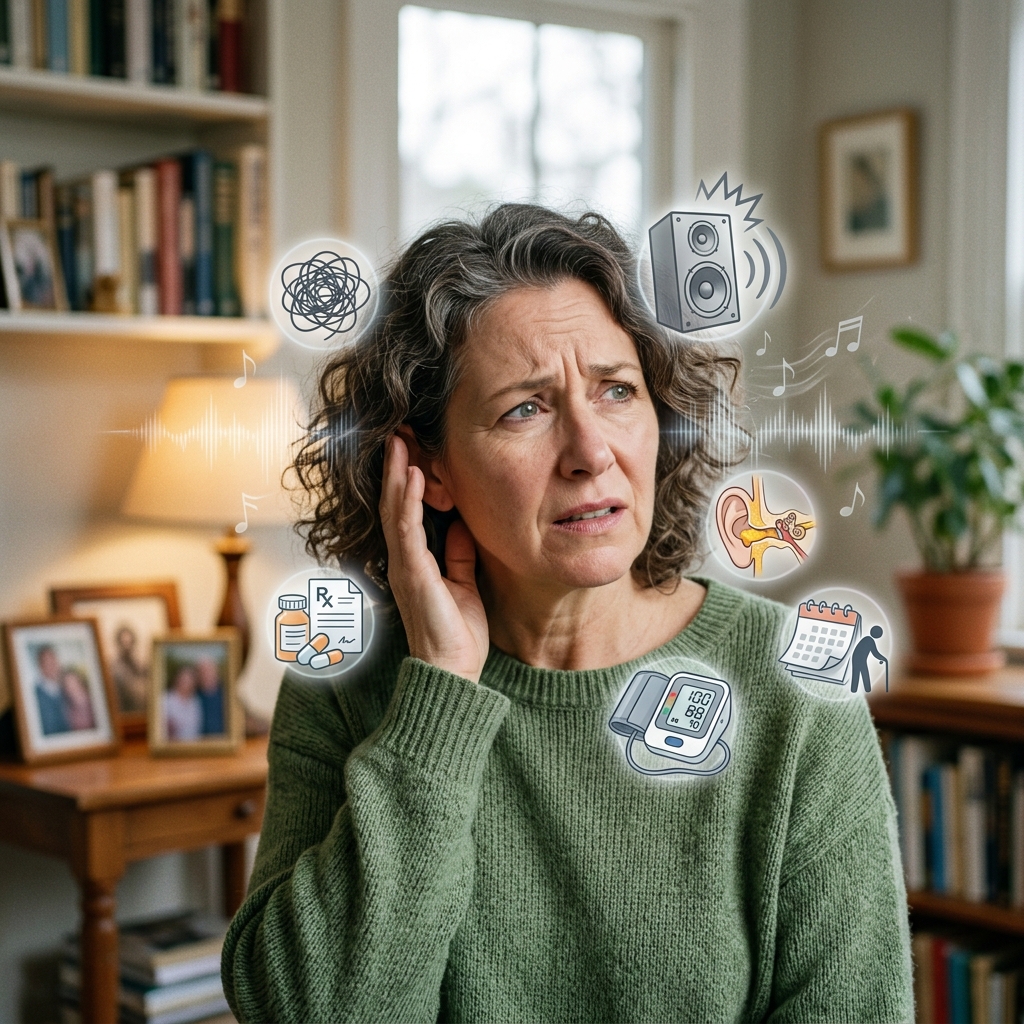
Sudden onset tinnitus has several possible causes. Some are completely benign. Others are worth taking seriously. Here are the most common ones.
1. You Were Just Exposed to Loud Noise
This is by far the most common reason for sudden ear ringing — and also the most harmless in most cases. If you just left a concert, a nightclub, a sporting event, or any loud environment and your ear is ringing — what you are experiencing is temporary noise-induced tinnitus. Your cochlear hair cells have been overstimulated and are essentially in recovery mode. In most cases this resolves within a few hours to a day. The danger is when it happens repeatedly — each episode can cause cumulative damage that eventually becomes permanent. What to do: Get away from noise immediately, rest in a quiet environment (but not complete silence — some background
sound helps), and let your ears recover. If the ringing persists beyond 24 to 48 hours, see a doctor.
2. A Sudden Change in Ear Pressure
Have you ever had your ears pop on a plane? That same mechanism — Eustachian tube dysfunction — can cause sudden ringing in the ear. The Eustachian tube connects your middle ear to the back of your throat and regulates ear pressure. When it does not open and close properly — due to altitude changes, congestion, or even just swallowing at the wrong moment — the pressure imbalance can trigger a brief ringing or buzzing sensation. This type is almost always temporary and resolves once pressure equalises. What to do: Swallow, yawn, or try the Valsalva manoeuvre (gently pinch your nose and blow). If you have a cold or sinus congestion, a decongestant may help.
3. Earwax Buildup or Blockage
This one catches people off guard. A sudden buildup of earwax pressing against the eardrum can trigger ringing that seems to appear out of nowhere. It does not always happen gradually. Sometimes a small piece of earwax shifts position and suddenly creates enough pressure against the eardrum to cause noticeable ringing, muffled hearing, or a feeling of fullness in the ear. What to do: Do not stick anything in your ear. See a doctor or pharmacist about ear drops or professional ear irrigation. Once the blockage clears, the ringing typically resolves completely.
4. You Are Stressed or Sleep Deprived
Stress and tinnitus have a deeply intertwined relationship that most people do not realise until they experience it firsthand.
High stress elevates cortisol levels, increases inflammation, and heightens the nervous system’s sensitivity to stimuli — including the auditory system; this can cause sudden ear ringing that seems to come from nowhere, particularly during or after an intense period of stress, anxiety, or poor sleep.
I have heard from many people who first noticed their ear ringing during a particularly difficult week at work or during a period of personal crisis—coincidence? Rarely.
What to do: Prioritise sleep. If the ringing appeared during a stressful period and then faded when things calmed down, stress was almost certainly a trigger. Address the stress to address the symptom.
5. A Medication You Are Taking
Certain medications are ototoxic—meaning they can damage the auditory system as a side effect. If you recently started a new medication and then noticed sudden ear ringing, the two may be connected.
Common culprits include:
- High-dose aspirin or ibuprofen (NSAIDs)
- Certain antibiotics, particularly aminoglycosides
- Some cancer chemotherapy drugs
- Diuretics (water pills)
- Quinine-based medications for malaria
- Some antidepressants at high doses
The ringing often improves or disappears when the medication is stopped or the dose is reduced—but never stop prescription medication without consulting your doctor first.
What to do: Check the side effect list for any medication you recently started. Speak with your prescribing doctor about alternatives if you suspect a connection.
6. A Sudden Drop in Blood Pressure
Standing up too quickly, skipping meals, or dehydration can cause a sudden drop in blood pressure. This momentarily reduces blood flow to the cochlea and auditory nerve—and that brief disruption can cause a short burst of ringing or whooshing sound in the ear.
This is usually very brief—lasting seconds rather than minutes—and resolves on its own as blood pressure normalises.
What to do: Sit or lie down immediately. Drink water. Eat something if you have not eaten. If these episodes happen frequently, speak with your doctor about blood pressure monitoring.
7. An Ear or Sinus Infection
Infections create inflammation and fluid buildup that can affect the pressure and function of the middle ear. If your sudden ear ringing is accompanied by ear pain, a feeling of fullness, or general illness—an infection may be the cause.
Sinus infections in particular can create pressure changes that radiate into the ear and cause ringing or muffled hearing that seems to appear out of nowhere.
What to do: See a doctor if you suspect an infection. Antibiotics (for bacterial infections) or decongestants can help resolve the underlying cause and the tinnitus with it.
8. Sudden Sensorineural Hearing Loss — This One Is Urgent
This is the one situation where sudden ear ringing should prompt immediate medical attention.
Sudden sensorineural hearing loss (SSHL) is a rapid loss of hearing—usually in one ear—that can occur over hours or days. It is often accompanied by sudden ringing or a feeling of fullness in the affected ear.
SSHL affects roughly 1 in 5,000 people per year, and the cause is not always clear. What is clear is that treatment—usually corticosteroids—is significantly more effective the sooner it is administered. The window is narrow.
What to do: If your sudden ear ringing is accompanied by noticeable hearing loss in one ear—do not wait. See a doctor or go to an emergency department within 24 to 72 hours. This is a medical urgency, not something to monitor and see.
When Should I Be Worried About Sudden Ear Ringing?

Most sudden ear ringing is temporary and harmless. But these specific situations warrant prompt medical evaluation:
* Ringing that does not resolve within 24 to 48 hours
* Ringing in one ear only with no obvious cause
* Ringing accompanied by hearing loss—even mild or muffled hearing
* Ringing that pulses in time with your heartbeat (pulsatile tinnitus)
* Ringing after a head or neck injury
* Ringing accompanied by dizziness, vertigo, or balance problems
* Ringing that appeared with no identifiable trigger
The general rule is this: if it resolves within a day and you can identify a likely cause (loud noise, stress, pressure change), it is almost certainly benign. If it persists beyond 48 hours with no clear cause—get it checked.
What Can You Do Right Now?

If your ear started ringing suddenly and you are looking for immediate steps—here is what actually helps:
Move away from noise
If you are still in a loud environment, leave immediately. Continued noise exposure prolongs recovery.
Do not sit in complete silence
Counterintuitively, total silence makes tinnitus worse—the ringing becomes the only thing to focus on. Turn on a fan, play soft background music, or use a white noise app.
Reduce your stress level right now
Slow, deep breathing activates the parasympathetic nervous system and can reduce tinnitus intensity within minutes. Try box breathing—inhale for 4 counts, hold for 4, exhale for 4, hold for 4.
Stay hydrated
Dehydration affects blood pressure and circulation to the inner ear. Drink water immediately, especially if the ringing followed physical activity or a period of not drinking enough.
Avoid caffeine and alcohol temporarily
Both can worsen tinnitus intensity in the short term by affecting blood flow and the nervous system.
Give it 24 hours before panicking
In most cases of sudden ear ringing, 24 hours of rest, reduced noise exposure, and stress reduction is enough for it to resolve on its own.
What If the Ringing Does Not Go Away?

If your ear ringing has persisted beyond a few days and you are still wondering why your ear is ringing all of a sudden—it is likely moving from acute to chronic territory.
This does not mean something terrible is wrong. But it does mean the underlying cause needs to be identified and addressed.
See your primary care doctor first. They will check for obvious causes like earwax, infection, or blood pressure issues. If those are ruled out, you may be referred to an audiologist or ENT specialist.
The Bottom Line
Sudden ear ringing is startling—but in most cases it is not dangerous. The most common causes are noise exposure, pressure changes, stress, earwax, or medication side effects—all of which are either self-resolving or treatable.
The situation that warrants genuine urgency is sudden ringing accompanied by hearing loss in one ear. If that describes your situation, do not read more articles—see a doctor today.
For everyone else: take a breath. Get away from noise. Drink some water. Give it 24 to 48 hours. And if it persists—now you know exactly what to do next.