

Stop ringing in ears immediately? You know that moment when the ringing in your ears suddenly gets louder — maybe you just left a noisy environment, maybe stress has been building all day, maybe you woke up at 3am with that familiar high-pitched tone filling the silence — and all you want is for it to stop. Right now. Not tomorrow. Not after weeks of therapy. Now.
I get it. That urgency is real. If you are not sure what triggered it, understanding why your ear is ringing all of a sudden can help you identify the root cause.
So let me be upfront with you about two things before we get into the techniques.
First — some of these methods work quickly for many people. Not for everyone, and not every time. Tinnitus is complex and individual, and what works brilliantly for one person has no effect on another.
Second — the techniques in this article are for immediate relief. They address the symptom in the moment. If your tinnitus is persistent — meaning it comes back regularly or never fully goes away — you need a longer-term management strategy alongside these quick fixes. We will get to that at the end.
With that said — here are the ten most effective things you can do right now to reduce ear ringing.
The Finger Drumming Technique
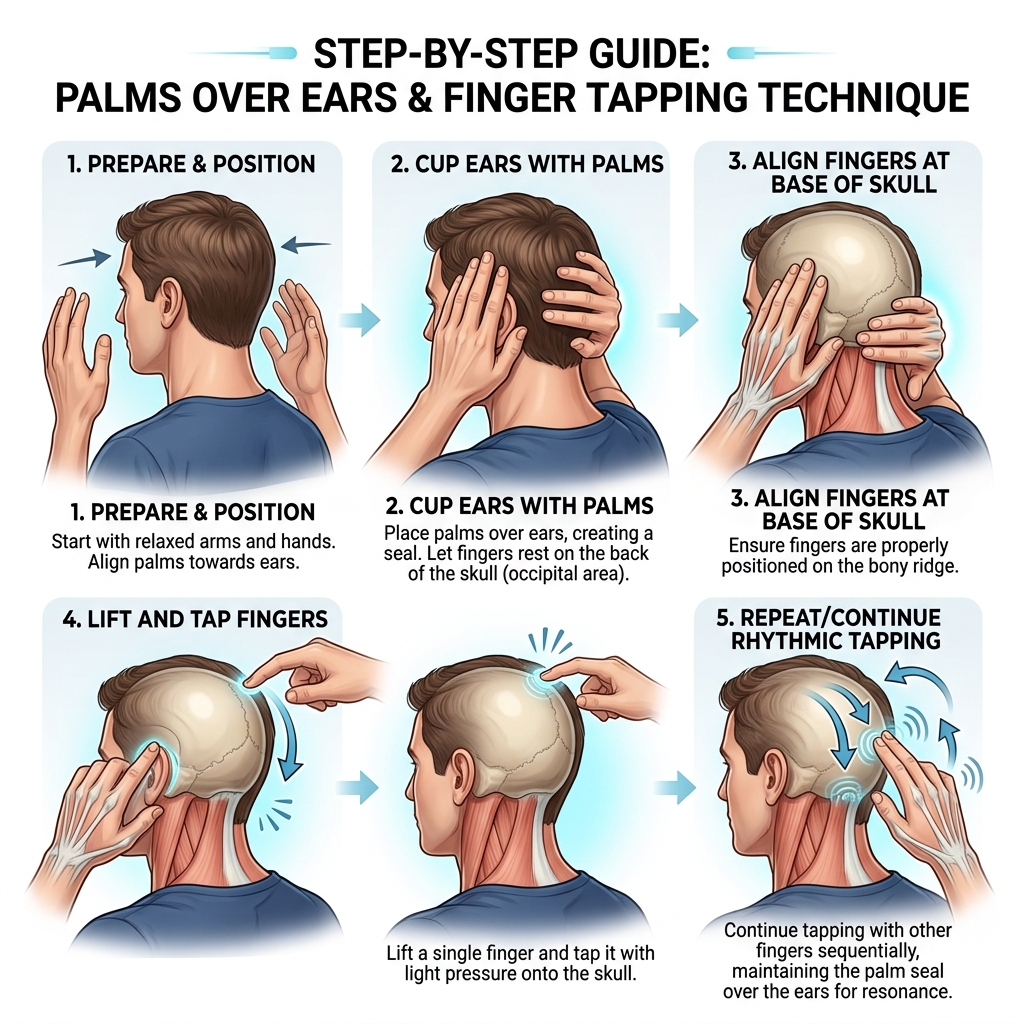
This is probably the most well-known quick relief technique for tinnitus — and for good reason. Many people report immediate or near-immediate reduction in ringing intensity when they try it. This is one of the most effective ways to stop ringing in ears immediately when it suddenly gets worse.
Here is how to do it:
Step 1: Place both palms over your ears, fingers pointing toward the back of your head. Your hands should cup your ears completely, blocking out external sound.
Step 2: Position your index fingers on top of your middle fingers at the back of your head.
Step 3: Snap your index fingers downward so they drum against the back of your skull. You will hear a loud drumming sound inside your head — that is normal.
Step 4: Repeat this 40 to 50 times.
Step 5: Remove your hands and notice whether the ringing has reduced.
The theory is that the vibration and pressure created by the drumming disrupts the abnormal neural activity in the auditory cortex that generates tinnitus. There is limited clinical research on this specific technique, but anecdotal reports are widespread and the method is harmless.
Results vary — some people find significant relief, others notice nothing. It takes about 30 seconds and costs nothing. Worth trying.
Read also: Long-term ways to stop ringing in ears that actually work.
Add Background Sound Immediately
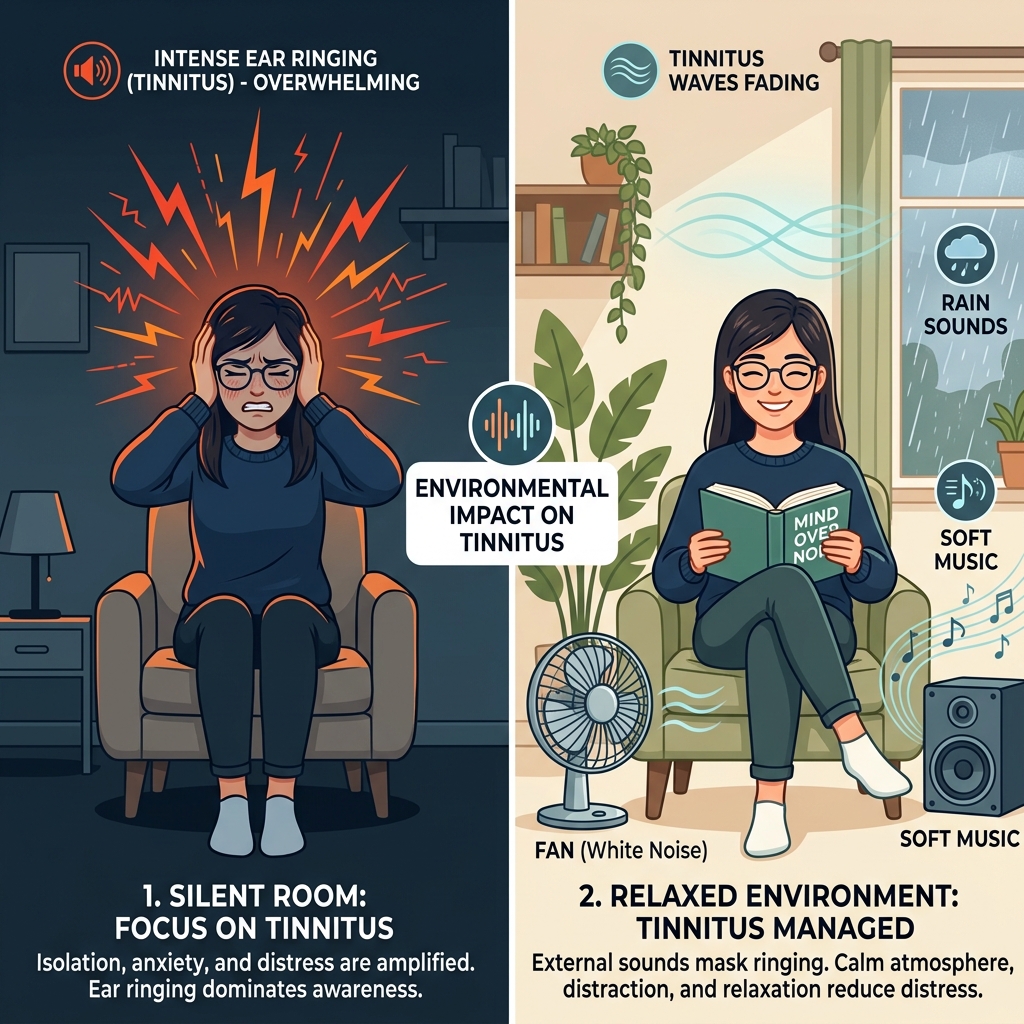
This is the single most reliably effective immediate intervention for tinnitus — and it is also the most consistently overlooked. This technique is often the most reliable way to stop ringing in ears immediately without medication.
Here is the counterintuitive truth: silence makes tinnitus worse. When there is no competing external sound, your brain has nothing to focus on except the internal ringing. The tinnitus fills the acoustic space completely and demands your full attention.
Adding background sound — even something as simple as a fan, a radio playing softly in another room, or rainfall playing from a free app on your phone — gives your brain something else to process. The tinnitus does not disappear, but it recedes into the background rather than occupying the foreground of your awareness.
What works best varies between people. Some find white noise most effective. Others prefer brown noise (deeper, less harsh than white), pink noise, nature sounds, or simply the television on low in the background.
If you are trying to sleep and the ringing is keeping you awake — a white noise machine near your bed or a free app like Calm or Insight Timer with nature sounds can provide enough acoustic competition to allow your brain to disengage from the tinnitus and drift off.
Try several different sounds and notice which one the ringing blends into most easily — that is your optimal masking sound.
Slow Your Breathing Down
This one sounds too simple to work. It is not.
Tinnitus and the nervous system are deeply connected. When you are stressed, anxious, or sleep deprived, your sympathetic nervous system is activated — your body is in a state of alert. In this state, your brain is more sensitive to all stimuli, including the phantom sounds of tinnitus. The ringing feels louder, more intrusive, more threatening.
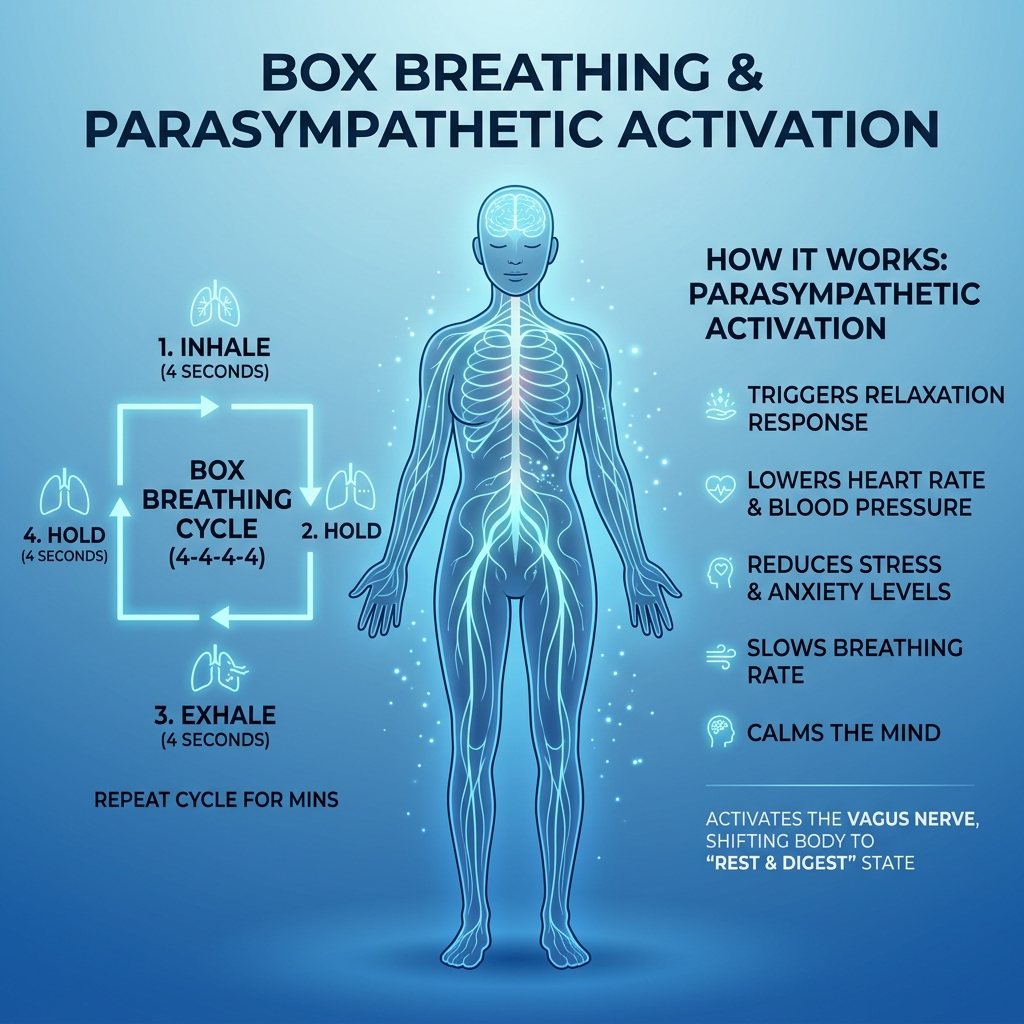
Slow, deliberate breathing activates the parasympathetic nervous system — the counterpart that tells your body it is safe to relax. As the nervous system calms, tinnitus perception often reduces noticeably within two to five minutes.
Try box breathing:
Inhale slowly through your nose for 4 counts.
Hold for 4 counts.
Exhale slowly through your mouth for 4 counts.
Hold for 4 counts.
Repeat for five to ten cycles.
This is not a placebo. The physiological mechanism is real and well documented. When your cortisol drops and your nervous system shifts out of alert mode, the auditory cortex’s sensitivity reduces along with it.
If stress triggered your symptoms, this is one of the quickest ways to stop ringing in ears immediately.
Drink Water
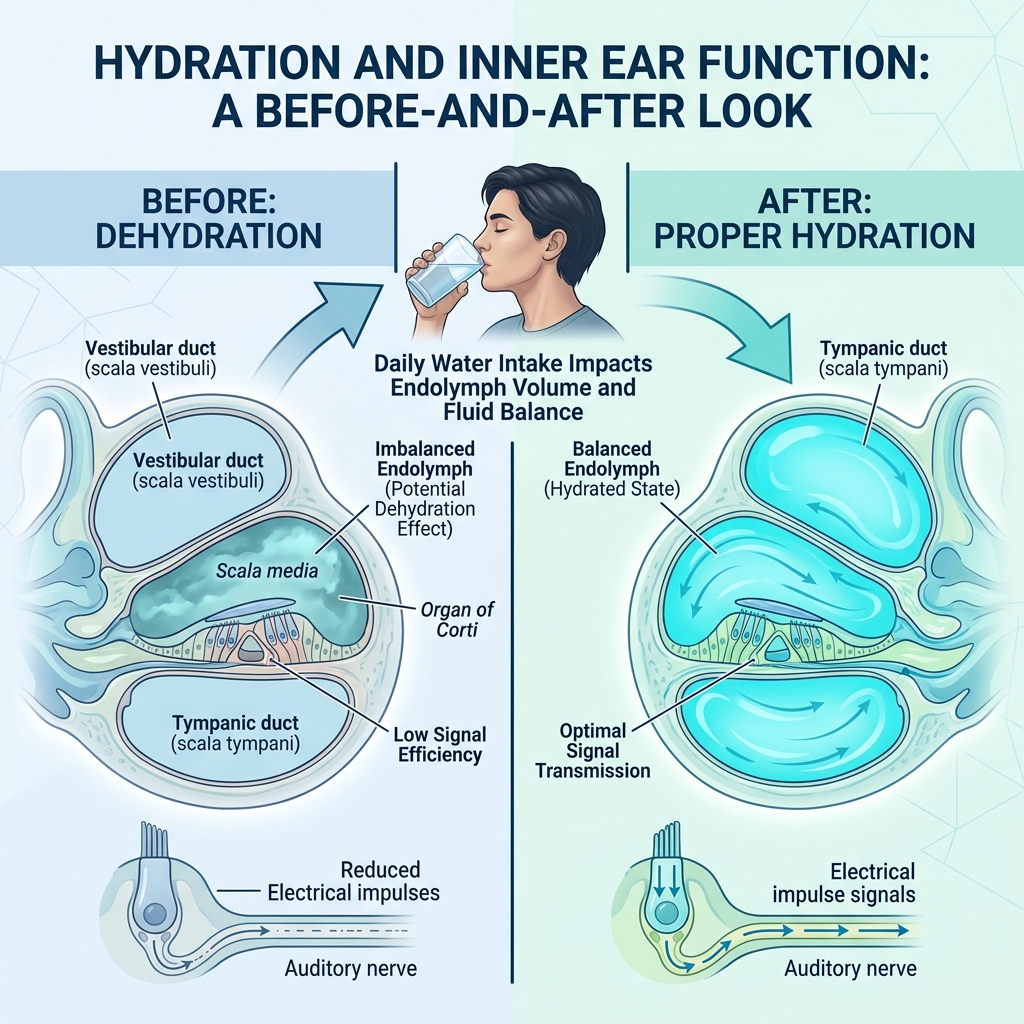
Dehydration affects blood pressure, circulation, and the fluid balance in your inner ear — all of which can influence tinnitus intensity. Many people overlook hydration when trying to stop ringing in ears immediately.
The cochlea — the fluid-filled snail-shaped structure in your inner ear — depends on a precise balance of fluids and electrolytes to function correctly. When you are dehydrated, this balance is disrupted, and the resulting change in inner ear fluid dynamics can worsen tinnitus.
This is particularly relevant if your ringing has flared up after exercise, after a hot day, after consuming alcohol, or after a period of not drinking enough.
What to do: Drink a large glass of water right now. Then another one twenty minutes later. For some people, this alone produces a noticeable reduction in ringing intensity within thirty minutes.
It is also worth noting that caffeine — coffee, tea, energy drinks — is a diuretic that increases fluid loss. If you have been drinking a lot of caffeine and not enough water, this may be contributing to your tinnitus flaring up.
Move Your Jaw and Neck
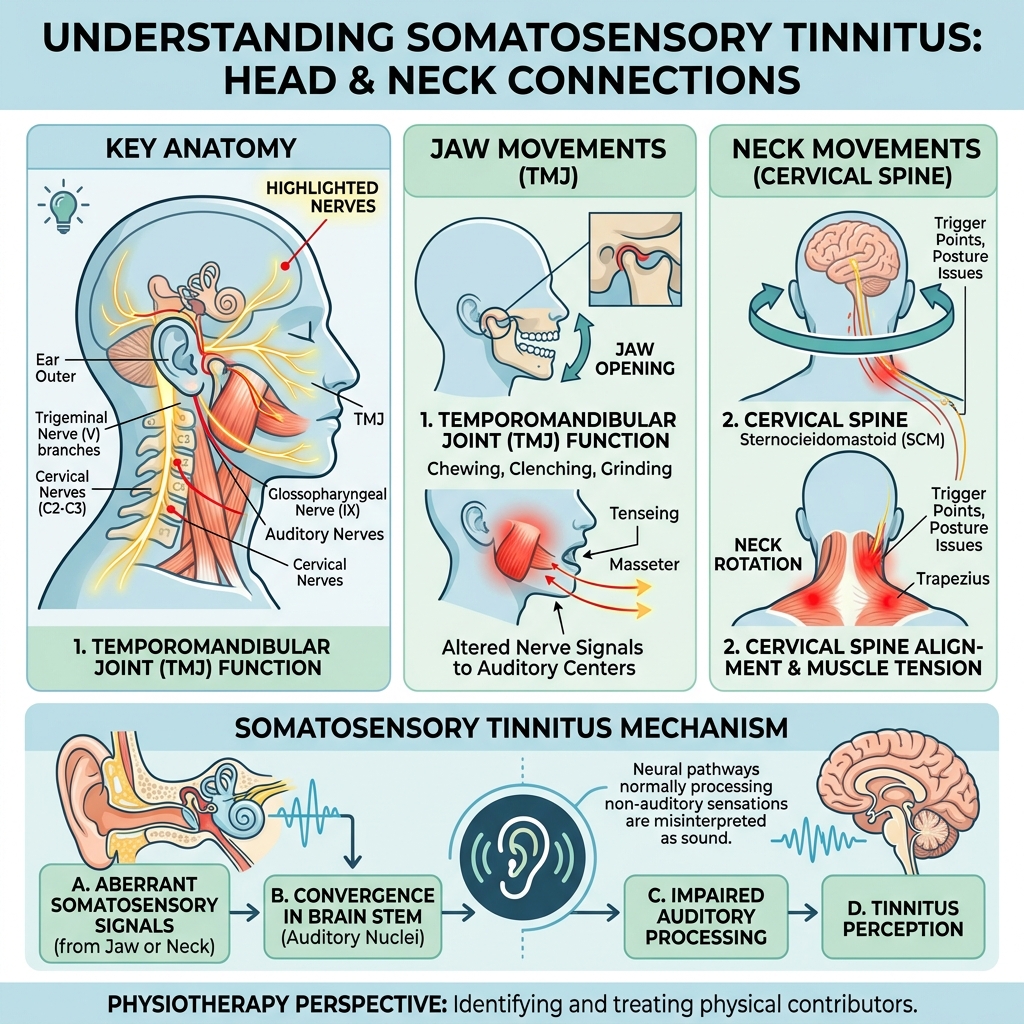
This technique is specifically useful for somatosensory tinnitus — a type of tinnitus that is influenced by the jaw, neck, and head muscles. This can help stop ringing in ears immediately if muscle tension is involved.
Somatosensory tinnitus is more common than most people realise. If you notice that your tinnitus changes when you move your head, turn your neck, clench your jaw, or press on certain points around your face and neck — somatosensory involvement is almost certainly present.
Try these movements and notice whether the tinnitus changes:
Slowly turn your head to the left and hold for ten seconds. Then to the right.
Gently tilt your head toward each shoulder and hold.
Open your mouth as wide as comfortable, hold for five seconds, then close.
Gently massage the muscles just in front of your ear and along your jaw.
If any of these movements temporarily change the pitch or volume of your tinnitus — even slightly — it confirms a somatosensory component. This is actually good news, because somatosensory tinnitus tends to respond well to physiotherapy, jaw exercises, and in some cases dental treatment for TMJ disorders.
For immediate relief, gentle neck stretches and jaw relaxation exercises can sometimes reduce tinnitus intensity noticeably within minutes.
Apply Gentle Pressure to the Ear Area
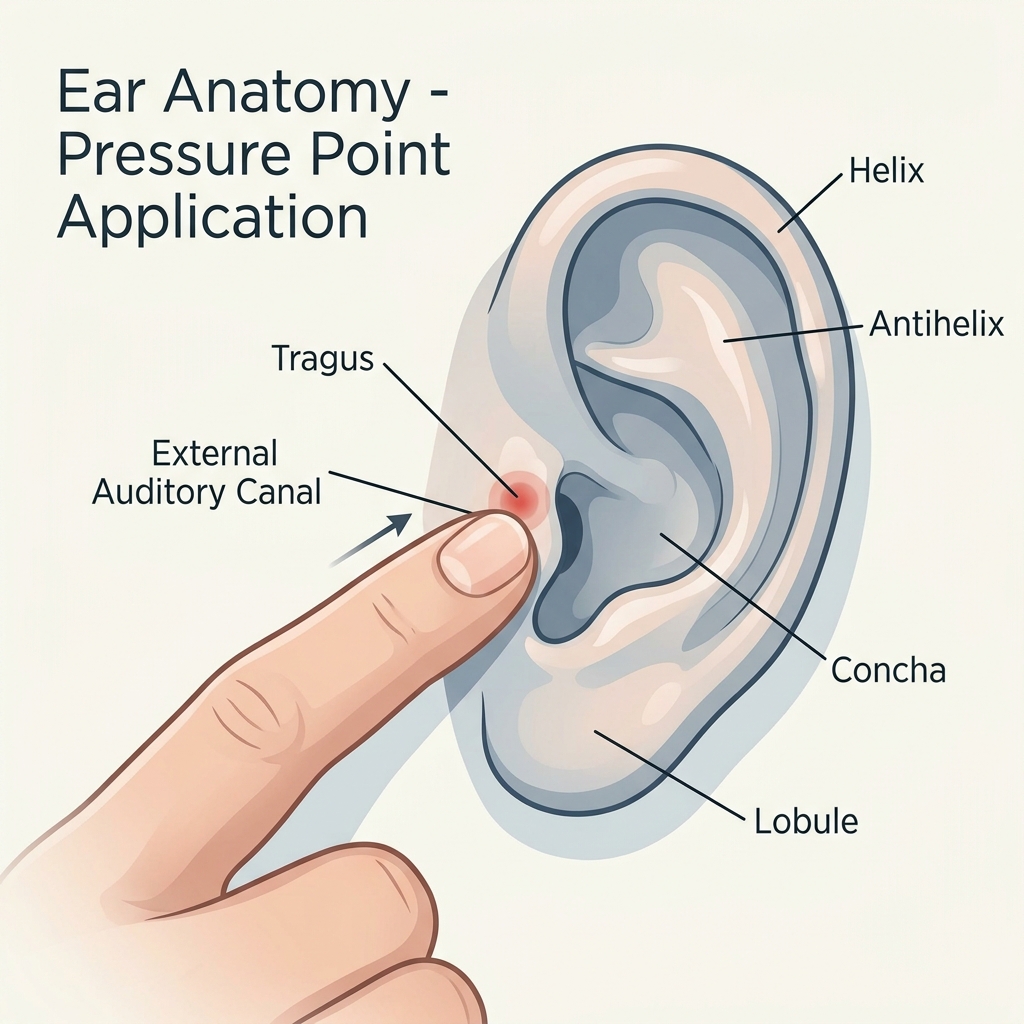
Some people find that gently pressing the tragus — the small triangular flap of cartilage at the entrance to the ear canal — provides temporary relief from ringing. Redirecting attention is a powerful tool to stop ringing in ears immediately in the moment.
The mechanism is not fully understood, but it may relate to the same somatosensory pathways described above — stimulating nerve endings around the ear that have connections to the auditory processing areas of the brain.
What to do: Using your index finger, gently press the tragus of your left ear inward and hold for ten to fifteen seconds. Release. Repeat two or three times.
This is not a guaranteed fix — but it costs nothing, takes thirty seconds, and some people find it genuinely helpful during acute flare-ups.
Get Out of a Stressful Environment

If you are in the middle of a stressful situation — a difficult conversation, a noisy or chaotic environment, a high-pressure work situation — and your tinnitus flares up, the most effective immediate action is simply to remove yourself from the stressor.
This is not avoidance in a negative sense. It is physiological management.
Find a quiet but not silent space. Sit or lie down. Give your nervous system five to ten minutes to begin deactivating its stress response. Combine this with the breathing technique above.
The tinnitus may not disappear completely, but removing the stress trigger often reduces its intensity significantly within minutes — because stress and tinnitus share the same nervous system amplification pathway.
Yawn or Swallow Repeatedly
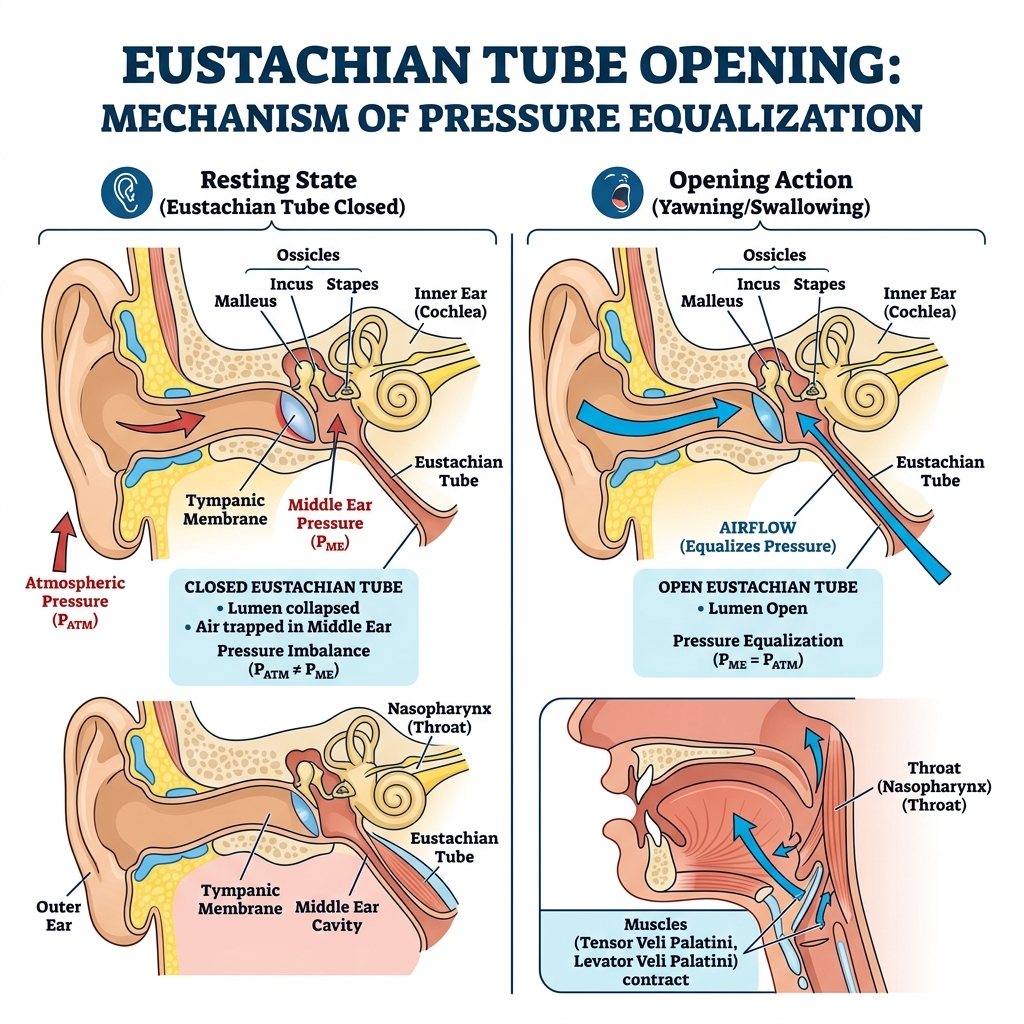
If your ear ringing is accompanied by a feeling of fullness, pressure, or the sensation that your ear is blocked — the cause may be Eustachian tube dysfunction rather than classic tinnitus.
The Eustachian tube regulates pressure between the middle ear and the back of the throat. When it is not opening and closing properly, the resulting pressure imbalance can cause ringing, muffled hearing, and ear fullness.
Yawning and swallowing both activate the muscles that open the Eustachian tube. Doing either repeatedly can equalise the pressure and provide immediate relief if this is the underlying mechanism.
You can also try the Valsalva manoeuvre: pinch your nose closed, close your mouth, and gently blow as if you are trying to breathe out through your nose. Do this gently — excessive force can cause damage. You may hear or feel a small pop as pressure equalises. Relief is often immediate.
Note: Do not use the Valsalva manoeuvre if you currently have an ear infection or upper respiratory infection.
Focus Your Attention Deliberately on Something Else
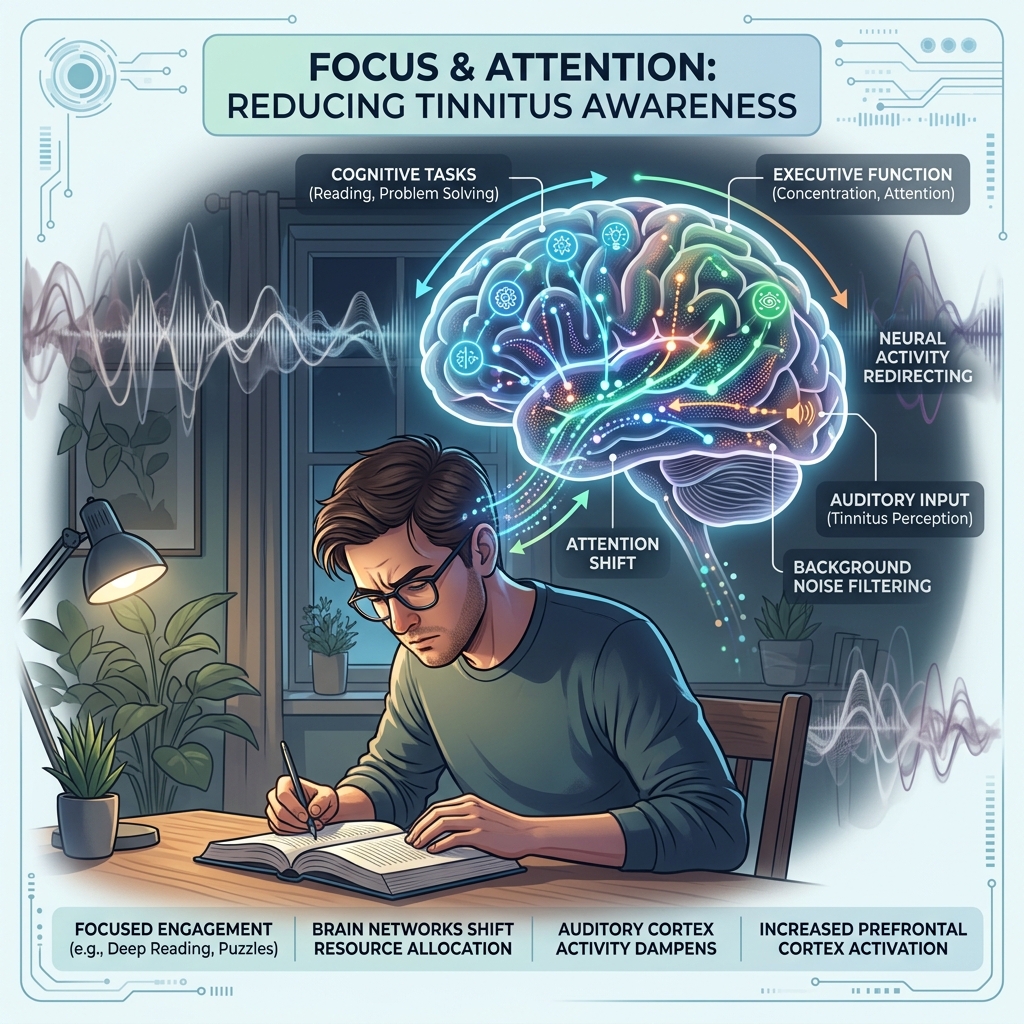
This one requires some practice — but it is one of the most powerful tools available for immediate tinnitus management once you develop the skill.
Tinnitus exists on a spectrum from foreground to background depending on where your attention is directed. When you focus on the tinnitus, your brain allocates more neural resources to processing it — it gets louder, more intrusive, more bothersome. When you focus intensely on something else, those neural resources get redirected, and the tinnitus fades toward the background.
This is not just a theory — it is the neurological basis of Tinnitus Retraining Therapy and Cognitive Behavioural Therapy for tinnitus, both of which have strong clinical evidence behind them.
For immediate application: find something that fully engages your attention. A genuinely absorbing conversation. A puzzle or problem that requires concentration. A book or article you are truly interested in. A physical activity that demands your focus.
The ringing does not disappear — but when your attention is genuinely elsewhere, many people find they stop noticing it entirely for stretches of time.
This is actually one of the reasons exercise is so effective for tinnitus management — it demands physical and mental attention simultaneously, and the cardiovascular benefits to inner-ear circulation are an added bonus.
Reduce Your Salt and Caffeine Intake Today
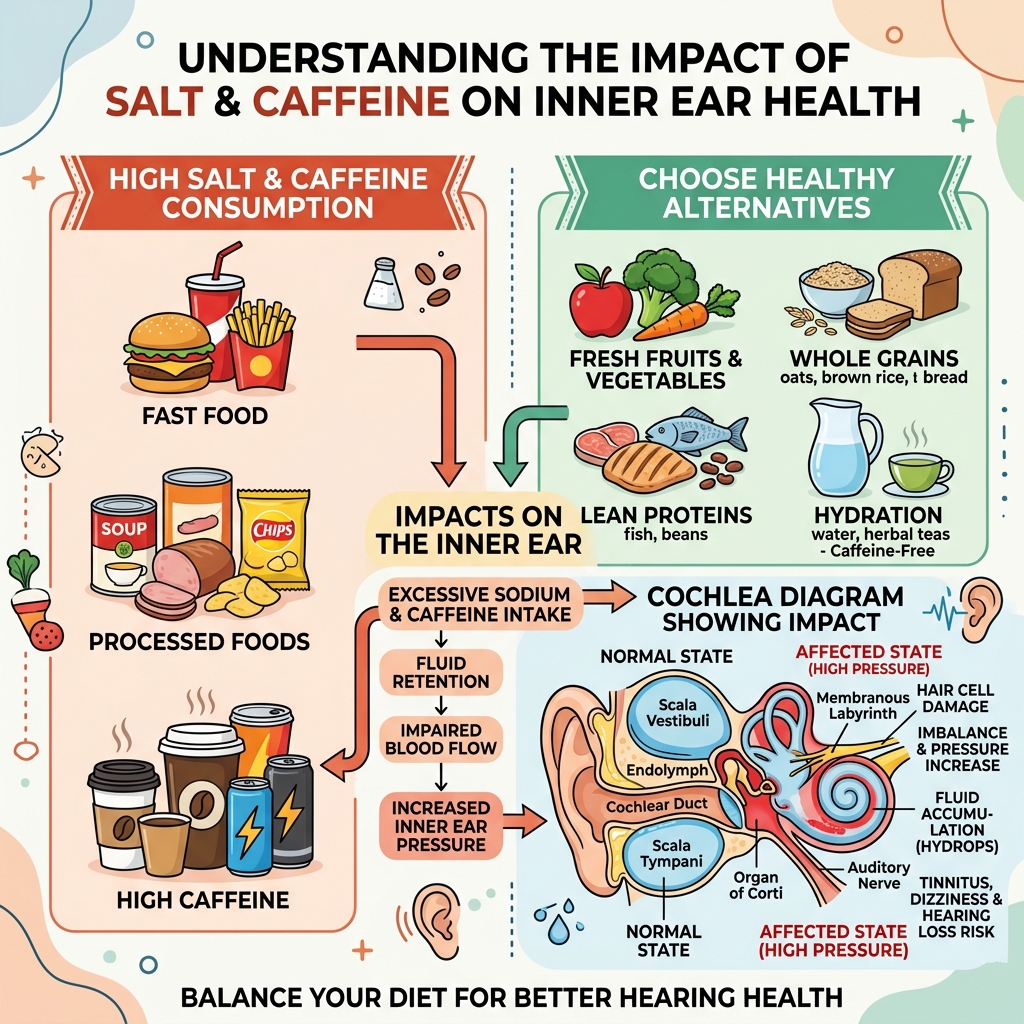
If your tinnitus has been worse than usual today — think about what you have consumed in the last twelve to twenty-four hours.
High sodium intake causes the body to retain fluid, which can increase pressure in the inner ear and worsen tinnitus. If you have eaten a particularly salty meal, processed food, or fast food recently, this may be a contributing factor.
Caffeine is a stimulant and vasoconstrictor — it temporarily narrows blood vessels, which can affect blood flow to the cochlea and increase tinnitus intensity. Many people with tinnitus notice a direct correlation between coffee intake and symptom severity.
What to do right now: Drink water, avoid caffeine for the rest of the day, and eat lightly and without salt at your next meal. For some people, this dietary adjustment alone produces a noticeable reduction in ringing within twelve to twenty-four hours.
Alcohol has a similar effect — it initially dilates blood vessels but then causes rebound constriction, and many tinnitus sufferers find that even moderate alcohol consumption triggers flare-ups the following day.
What If None of These Work?
If you have tried several of these techniques and your ear ringing has not reduced — or if it reduces temporarily but keeps coming back — the immediate relief approach is not addressing the real issue.
Persistent tinnitus that does not respond to acute management techniques is a signal that something underlying needs attention.
The most common underlying drivers of persistent tinnitus are:
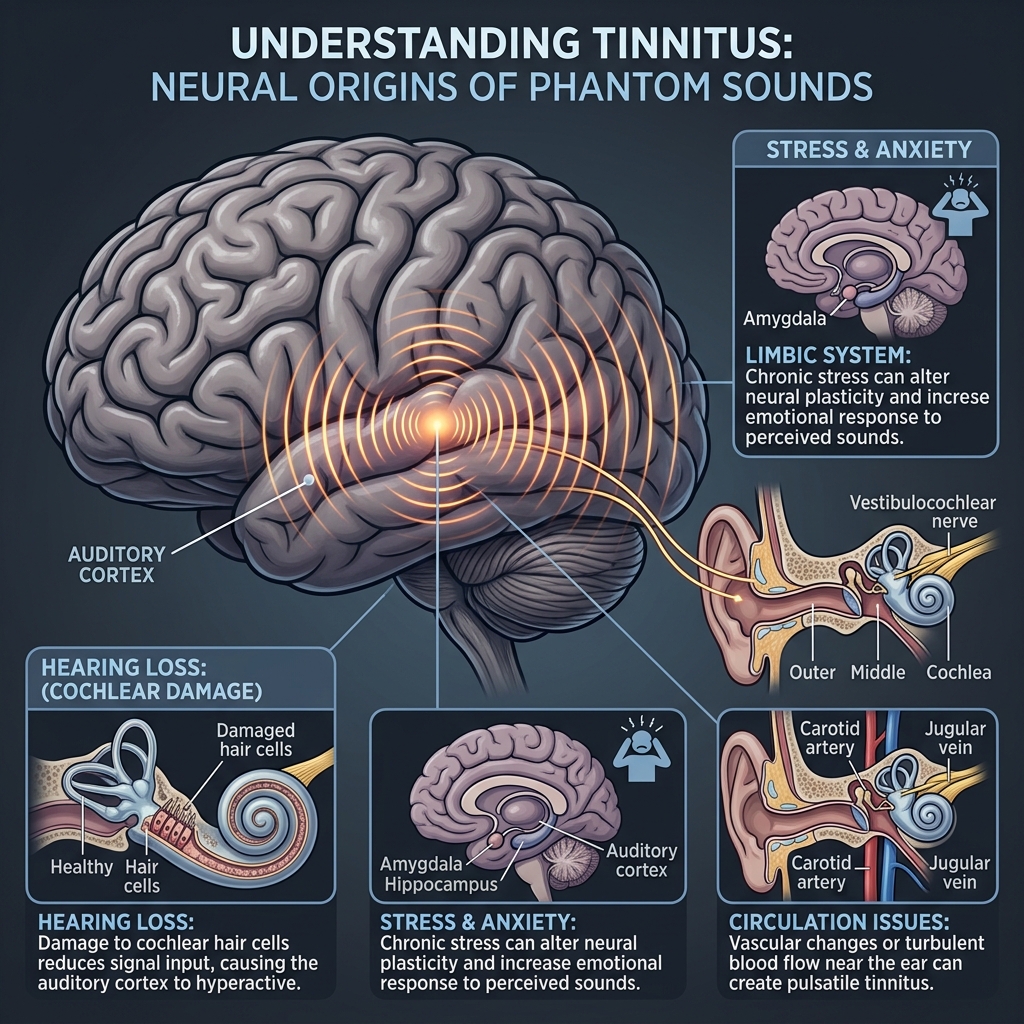
Cochlear hair cell damage from noise or age — which the brain compensates for by generating phantom sounds in the auditory cortex.
Cardiovascular factors — high blood pressure, poor circulation, or vascular issues affecting blood flow to the inner ear.
Chronic stress and nervous system dysregulation — keeping the auditory cortex in a state of heightened sensitivity.
Nutritional deficiencies — particularly B vitamins and certain minerals that support auditory nerve function.
For persistent tinnitus, the most effective approaches combine lifestyle management with active support for the brain’s auditory neural networks — because that is where the ringing is actually being generated. At this stage, it becomes important to understand whether tinnitus is permanent and what that means for your situation.
Conclusion
Stopping ear ringing immediately is possible in many cases — particularly when the ringing is triggered by stress, noise exposure, pressure changes, dehydration, or dietary factors.
The finger drumming technique, background sound, slow breathing, hydration, jaw movement, and attention redirection are all genuinely useful tools that work quickly for many people.
But they are management techniques — not cures. If your tinnitus is persistent, returning daily, or getting progressively worse, these techniques are a starting point, not a complete strategy.
The complete strategy involves understanding your specific trigger, addressing any underlying causes through proper medical evaluation, and supporting your auditory health over the long term — both through lifestyle and targeted natural nutrition.
Start with the techniques above right now. And if the ringing keeps coming back — start building the longer game too.