Is Tinnitus Permanent? The Honest Answer Nobody Tells You
If you have been living with ringing, buzzing, or humming in your ears for any length of time, this is probably the question keeping you up at night—sometimes quite literally.
Is this permanent? Will it ever stop? Am I going to hear this sound for the rest of my life?
I want to give you an honest answer—not the vague, non-committal response that most people get from a quick Google search. The truth is more nuanced than a simple yes or no, and understanding the nuance actually gives you more control over your situation than you might think.
Let me explain.
Is Tinnitus Permanent? It Depends on the Cause
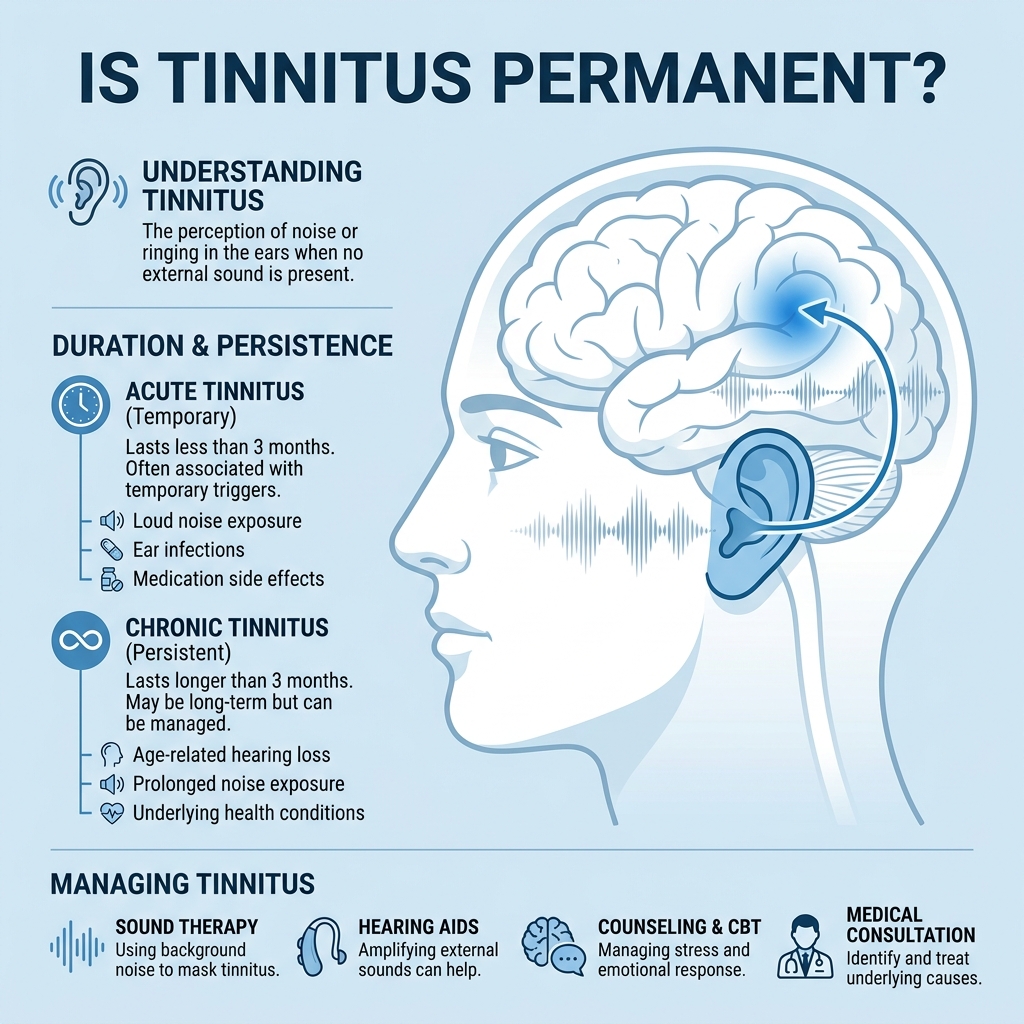
Is Tinnitus Permanent? Whether tinnitus is permanent depends almost entirely on what is causing it in the first place. That might sound like a frustrating non-answer, but it is actually useful information—because it means that identifying your cause is the single most important thing you can do right now. Not just for understanding your prognosis, but for knowing what treatment options actually apply to your situation.
Here is how it breaks down.
Also Read: Why your ear is ringing all of a sudden
When Tinnitus Is Temporary
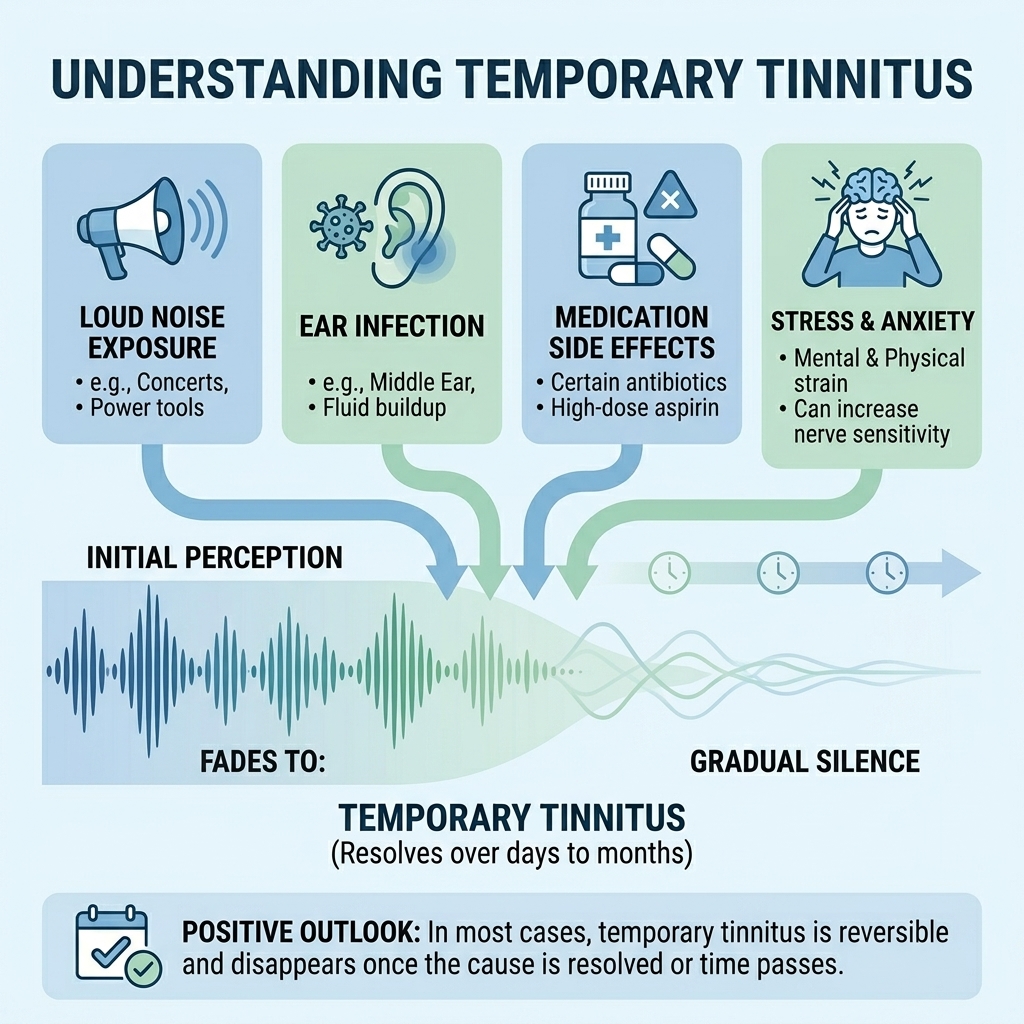
There are several situations where tinnitus is almost always temporary—meaning it resolves on its own without any specific treatment.
After Loud Noise Exposure
This is the most common type of temporary tinnitus. You leave a concert, a sporting event, or a loud work environment and your ears are ringing. This is your cochlear hair cells recovering from overstimulation.
In most cases this resolves within a few hours to 24 hours. Occasionally it can last two to three days after extreme noise exposure.
The key word here is occasionally. If this keeps happening to you—repeated noise exposure without protection—each episode can cause cumulative damage that eventually stops resolving. What starts as temporary becomes chronic over time. This is why hearing protection matters so much even when the ringing always seems to go away eventually.
From Ear Infections or Blockages
Tinnitus caused by an ear infection, fluid in the middle ear, or earwax buildup is almost always temporary. Once the underlying blockage or infection clears—whether on its own or with treatment—the ringing typically resolves with it.
If you noticed ringing starting around the same time as a cold, sinus infection, or feeling of fullness in your ear—this is likely your situation. It is worth seeing a doctor to confirm and treat the root cause rather than waiting it out.
From Medication Side Effects
Some medications are known to cause tinnitus as a side effect—particularly high doses of aspirin, certain antibiotics, diuretics, and some cancer treatments. This type of tinnitus is usually dose-dependent and reversible.
When the medication is stopped or the dose is reduced, the tinnitus often fades within days to weeks. This is not always the case—some ototoxic medications can cause permanent damage if used for extended periods—but in many cases, medication-induced tinnitus is temporary.
Never stop a prescription medication without talking to your doctor first. But if you suspect a connection between a medication and your tinnitus, it is absolutely worth raising with your prescribing physician.
From Stress or Anxiety
Stress-induced tinnitus is real and more common than most people realise. High cortisol levels, sleep deprivation, and chronic anxiety can all heighten the nervous system’s sensitivity to auditory stimuli—essentially turning up the volume on sounds the brain would normally filter out.
Many people find that tinnitus which appeared during an intensely stressful period—a difficult life event, a period of burnout, or a health scare—fades significantly once the stress resolves and sleep improves.
This does not mean the tinnitus was imaginary. It was absolutely real. It just means that the nervous system was the primary driver, and when the nervous system settles, so does the sound.
When Tinnitus Becomes Chronic
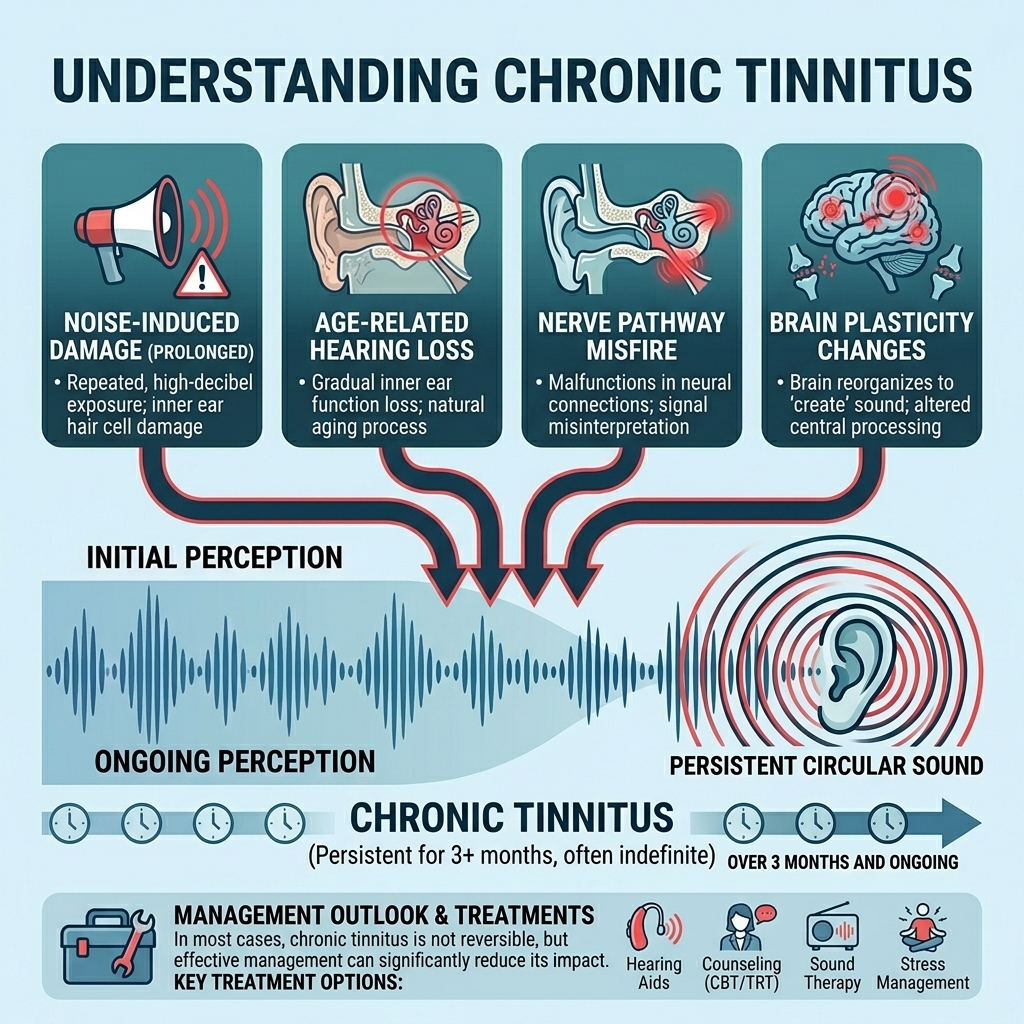
Tinnitus is considered chronic when it persists for three months or longer. At this point the likelihood of complete spontaneous resolution—meaning it just goes away on its own without any intervention—decreases significantly.
This does not mean it is necessarily permanent in the absolute sense. But it does mean that hoping it will disappear on its own is probably not a productive strategy.
Chronic tinnitus is most commonly associated with:
Permanent Hearing Loss
This is the most significant factor. When cochlear hair cells are permanently damaged—through years of noise exposure, age-related degeneration, or acoustic trauma—they do not regenerate. Unlike some other cells in the body, cochlear hair cells in humans cannot repair themselves once destroyed.
When this happens, the brain’s auditory cortex undergoes a process called maladaptive plasticity. In simple terms—the brain reorganises itself in response to the changed input from the damaged cochlea, and in doing so, it generates phantom sounds. This is the neurological mechanism behind most cases of chronic tinnitus.
It is worth noting that this process happens in the brain—not the ear. Which has important implications for how tinnitus can be managed, even when the underlying hearing loss cannot be reversed.
Cardiovascular Conditions
High blood pressure, atherosclerosis, and poor circulation can cause tinnitus—particularly the pulsatile type that pulses in rhythm with the heartbeat. If these conditions are not managed, the tinnitus associated with them is unlikely to resolve on its own.
The good news is that cardiovascular tinnitus often responds to treatment of the underlying condition. Managing blood pressure, improving diet and exercise habits, and addressing circulation issues can produce measurable improvement in tinnitus severity.
Ménière’s Disease
Ménière’s disease is an inner ear disorder that causes episodes of vertigo, hearing loss, and tinnitus. The tinnitus associated with Ménière’s tends to be chronic and fluctuating—worsening during episodes and improving between them.
It is manageable but not curable in most cases. Treatment focuses on reducing the frequency and severity of episodes through dietary changes, medication, and in some cases surgical intervention.
Can Tinnitus Ever Go Away After Years?
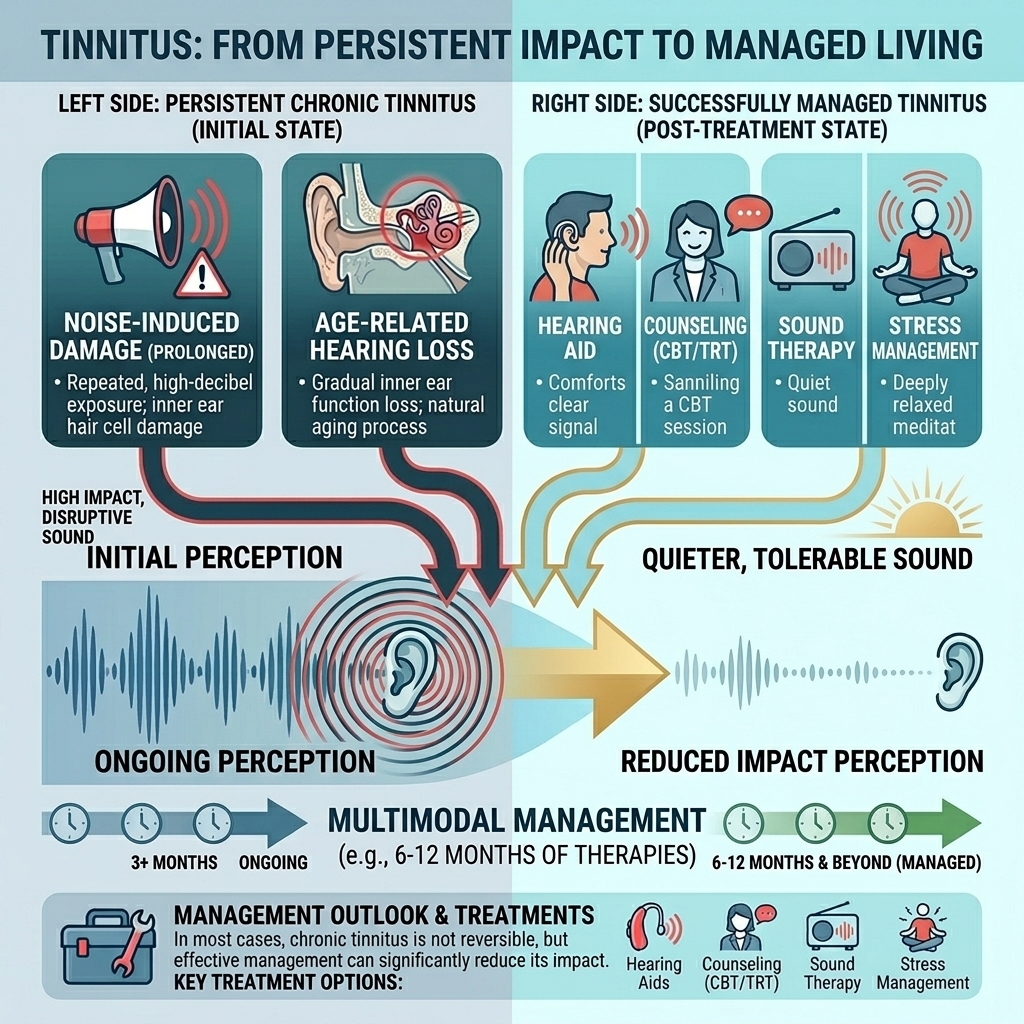
Is Tinnitus Permanent? This is a question I see asked constantly in tinnitus communities—and the honest answer is yes, sometimes, but it becomes less likely the longer it has been present.
There are documented cases of people who experienced significant tinnitus for years and then saw it reduce substantially or even disappear. This tends to happen in a few specific circumstances:
When the underlying cause is finally identified and treated. Sometimes tinnitus persists for years because nobody has properly investigated what is causing it. A change in medication, treatment of an underlying condition, or even something as simple as professional earwax removal has resolved tinnitus that had been present for years.
When significant lifestyle changes are made. People who dramatically reduce stress, improve sleep, cut out alcohol and caffeine, and start exercising regularly sometimes report meaningful reduction in tinnitus over months to years.
When the brain habituates. This is perhaps the most important concept in tinnitus management—and one that does not get nearly enough attention.
Habituation: The Goal That Changes Everything
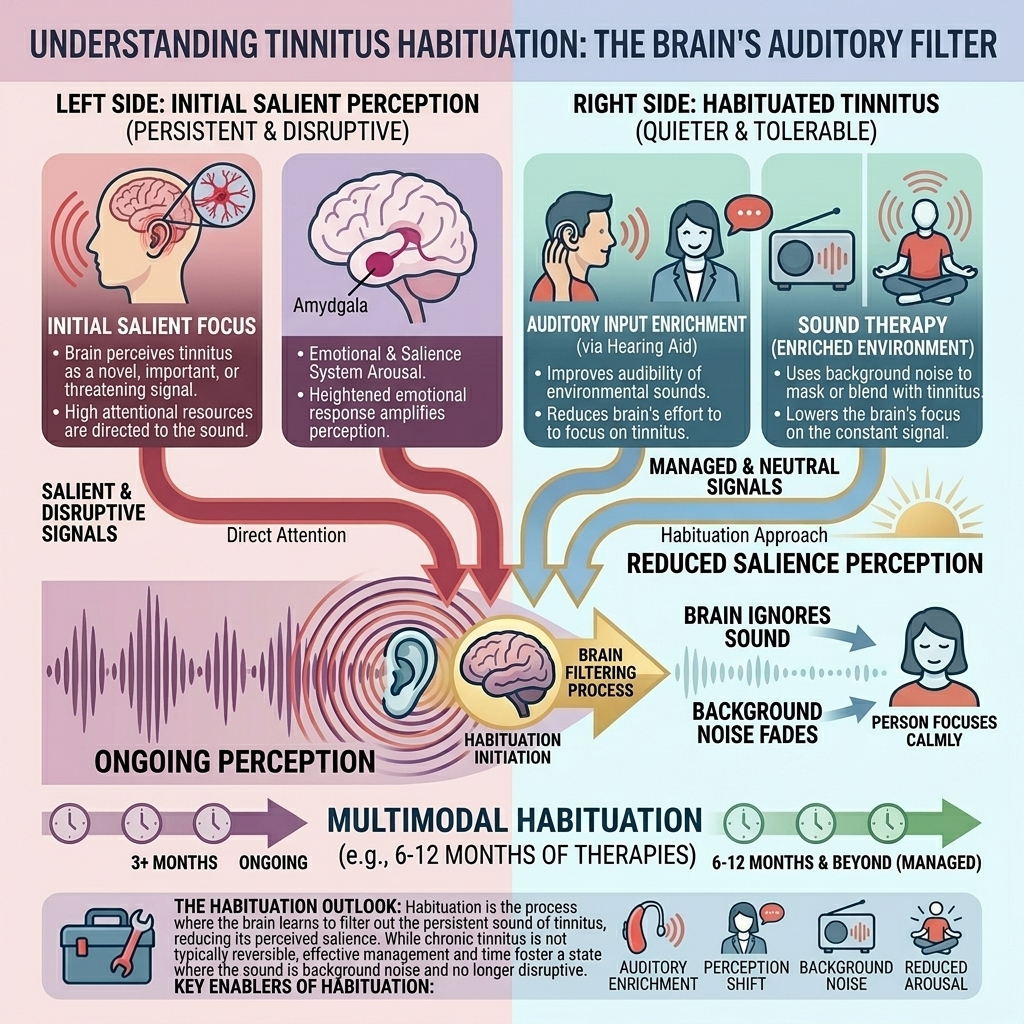
Here is something that many doctors do not explain clearly enough when they tell tinnitus patients there is nothing that can be done.
The brain is remarkably adaptable. It is constantly deciding what sounds to pay attention to and what sounds to filter into the background. The hum of an air conditioner. The sound of traffic outside. The refrigerator running in the kitchen. You stop noticing these sounds not because they disappear—but because your brain classifies them as non-threatening and non-important, and filters them out.
This same process can happen with tinnitus. It is called habituation—and it is the goal of several evidence-based tinnitus therapies including Tinnitus Retraining Therapy and Cognitive Behavioural Therapy.
When someone habituates to their tinnitus, the sound may still be present—but they stop noticing it. It no longer triggers an emotional response. It no longer disrupts sleep. It no longer dominates their awareness.
For many people with chronic tinnitus, habituation is a more realistic and achievable goal than a cure—and the quality of life improvement it produces can be just as meaningful.
What Actually Affects Whether Your Tinnitus Improves?
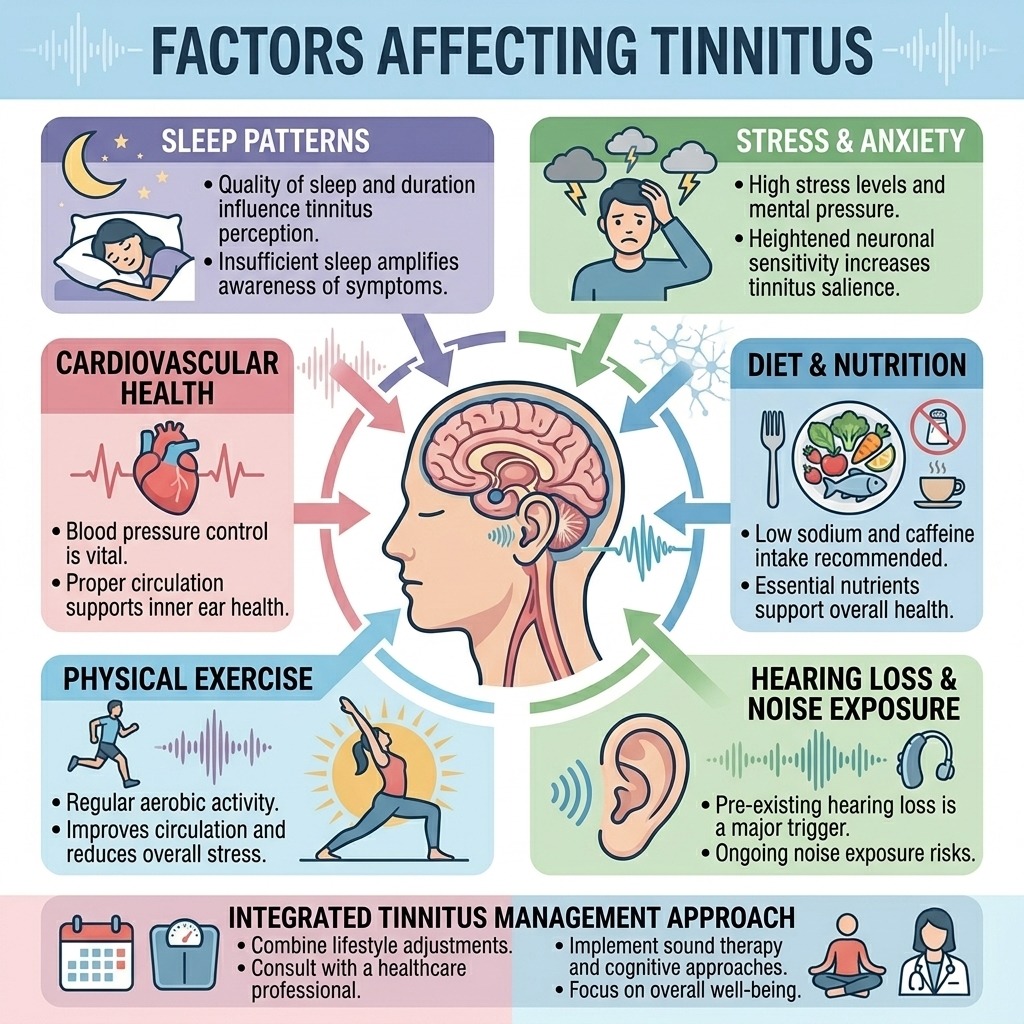
Based on what research shows, here are the factors that most influence whether tinnitus improves over time:
How Long You Have Had It
The shorter the duration, the better the chances of significant improvement. Tinnitus that has been present for less than six months has a meaningfully better prognosis than tinnitus that has been present for years. This is one reason why addressing tinnitus early—rather than hoping it goes away—matters.
Whether There Is Underlying Hearing Loss
Tinnitus with significant associated hearing loss tends to be more persistent than tinnitus with normal hearing. Hearing aids—which amplify external sounds and make tinnitus less noticeable—are often recommended as part of management for people in this group.
Your Overall Health and Lifestyle
Blood pressure, stress levels, sleep quality, diet, and exercise habits all measurably influence tinnitus severity. People who actively manage these areas consistently report better outcomes than those who do not—regardless of the underlying cause.
Whether You Seek Active Management
People who actively engage with tinnitus management—whether through sound therapy, CBT, lifestyle changes, or natural support—consistently report better outcomes than people who simply try to ignore it or wait for it to resolve on its own.
Tinnitus rewards action. Passivity tends to allow the condition to worsen as the brain’s negative association with the sound deepens over time.
What You Can Do Starting Today
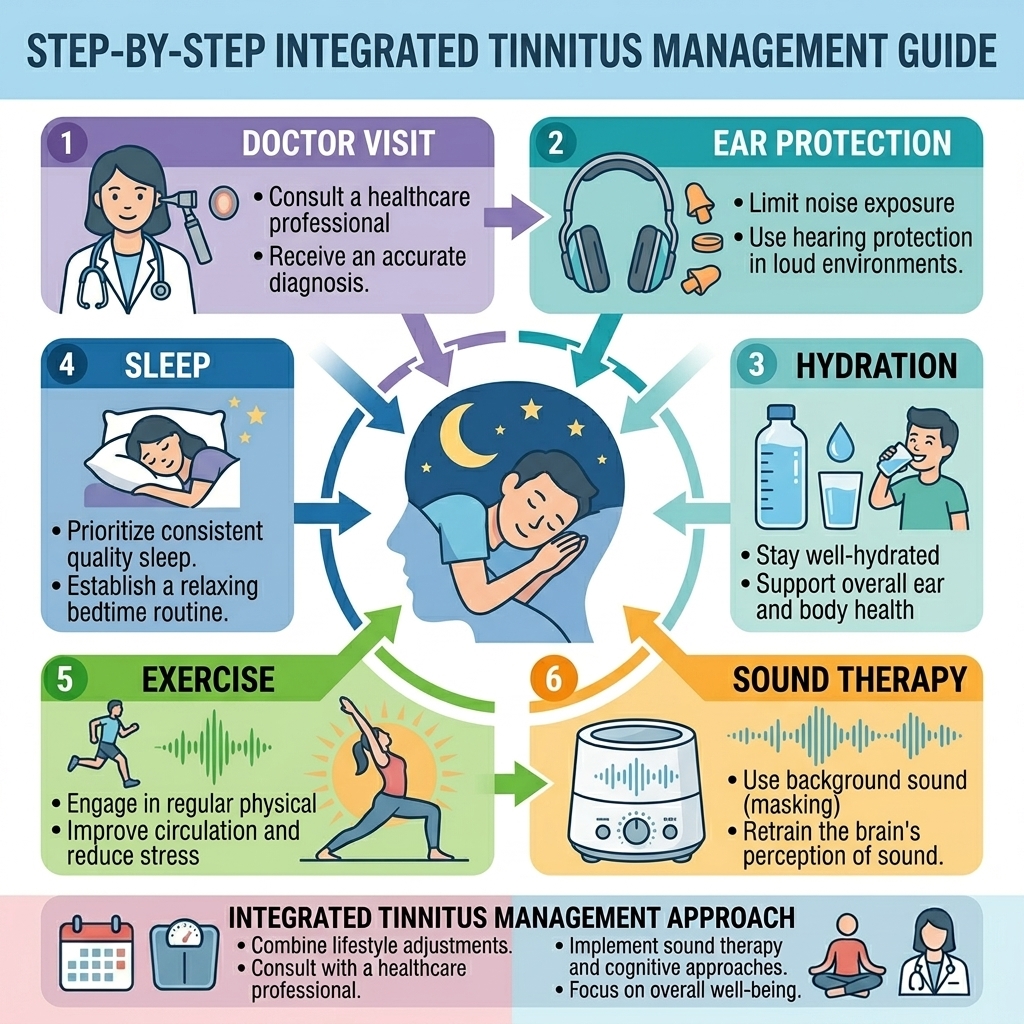
Whether your tinnitus turns out to be temporary or chronic, the steps that give you the best chance of improvement are the same:
Get a proper diagnosis. See your doctor and ask for a referral to an audiologist or ENT. Understanding what is driving your tinnitus is the foundation of everything else.
Protect your hearing from this point forward. Whether or not past damage is reversible, preventing further damage is entirely within your control.
Address your cardiovascular health. Blood pressure, circulation, and heart health are directly connected to tinnitus. Regular exercise, a Mediterranean-style diet, and managing blood pressure all help.
Manage stress actively. The tinnitus and stress cycle is real and documented. Breaking it requires deliberate action—not just hoping for less stressful circumstances.
Improve your sleep. Sleep deprivation worsens tinnitus significantly. Prioritising sleep quality is one of the highest-leverage actions you can take for tinnitus improvement.
Reduce caffeine, alcohol and salt. Research consistently links these to increased tinnitus intensity. Reducing them costs nothing and can produce noticeable results within weeks.
Consider sound therapy. White noise at night, wearable sound generators, and hearing aids all reduce the perceived intensity of tinnitus and support the habituation process.
Support your brain’s auditory health. Since tinnitus originates in the brain’s auditory networks—not the ear—approaches that target neural health, inner-ear circulation, and oxidative stress defence address the condition at its actual source.
Read also: Complete guide on How to stop ringing in ears.
Conclusion
Is tinnitus permanent? Here is the honest summary:
If your tinnitus appeared recently and has an identifiable cause—noise exposure, medication, infection, or stress—there is a good chance it will improve significantly or resolve completely with the right approach.
If your tinnitus has been present for months or years and is associated with hearing loss—complete resolution is less likely, but meaningful improvement in how much it affects your daily life is absolutely achievable for most people.
The worst thing you can do is nothing. The brain’s relationship with tinnitus is not fixed—it can be changed. The people who see the best outcomes are those who treat tinnitus as something to be actively managed rather than passively endured.
You have more control over this than you might think.